Ultrasound Surveillance for Silicone Breast Implants
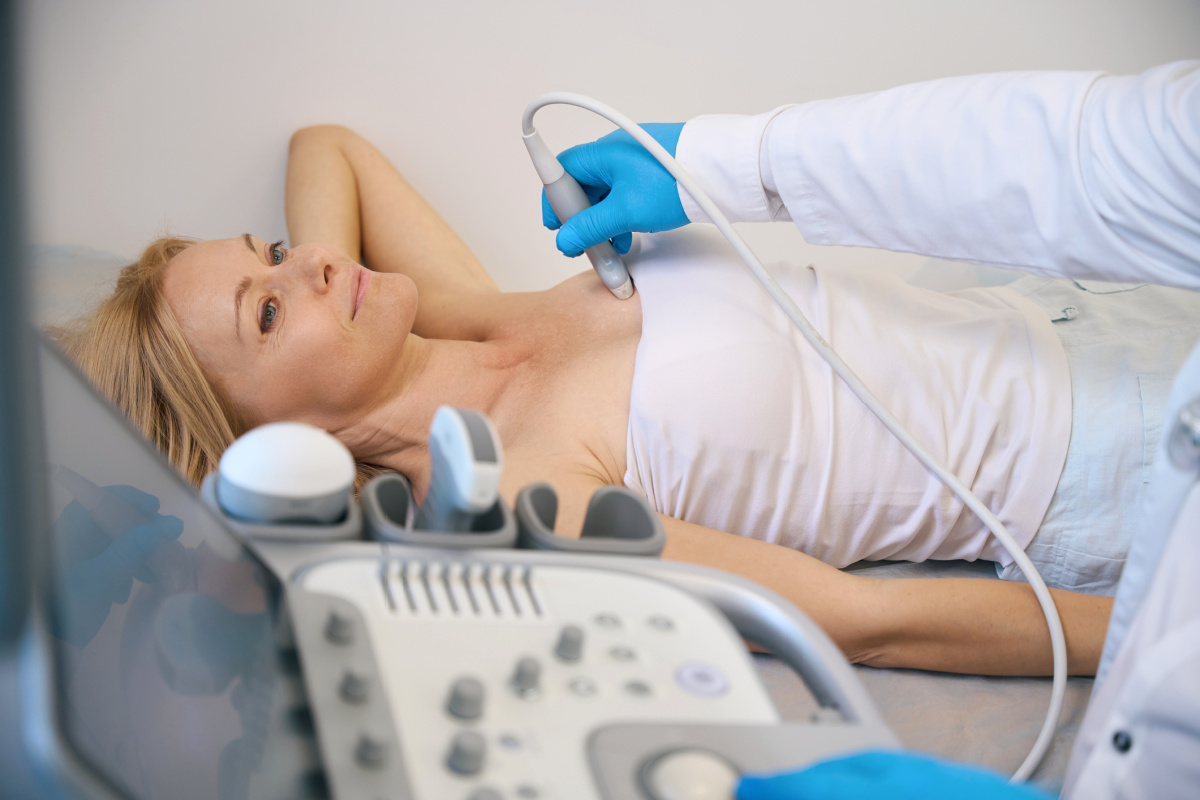
Routine Imaging for Your Peace of Mind
If you have silicone breast implants, routine ultrasound screenings are an easy, painless way to monitor their condition. Dr. Kirby offers complimentary high-resolution ultrasound surveillance of silicone breast implants as part of your routine follow-up care after cosmetic breast augmentation.
Why is Ultrasound Surveillance Important?
Silicone breast implants are a safe and effective option for breast augmentation or reconstruction. However, like any medical device, they can change over time. Regular ultrasound surveillance is an FDA-recommended method to:
- Detect silent ruptures early. A silent breast implant rupture is a condition where the implant shell develops a tear without noticeable symptoms.
- Ensure implant integrity. Monitoring helps maintain the safety and longevity of your implants.
- Prevent complications. Early detection can prevent further issues, such as asymmetry or discomfort.
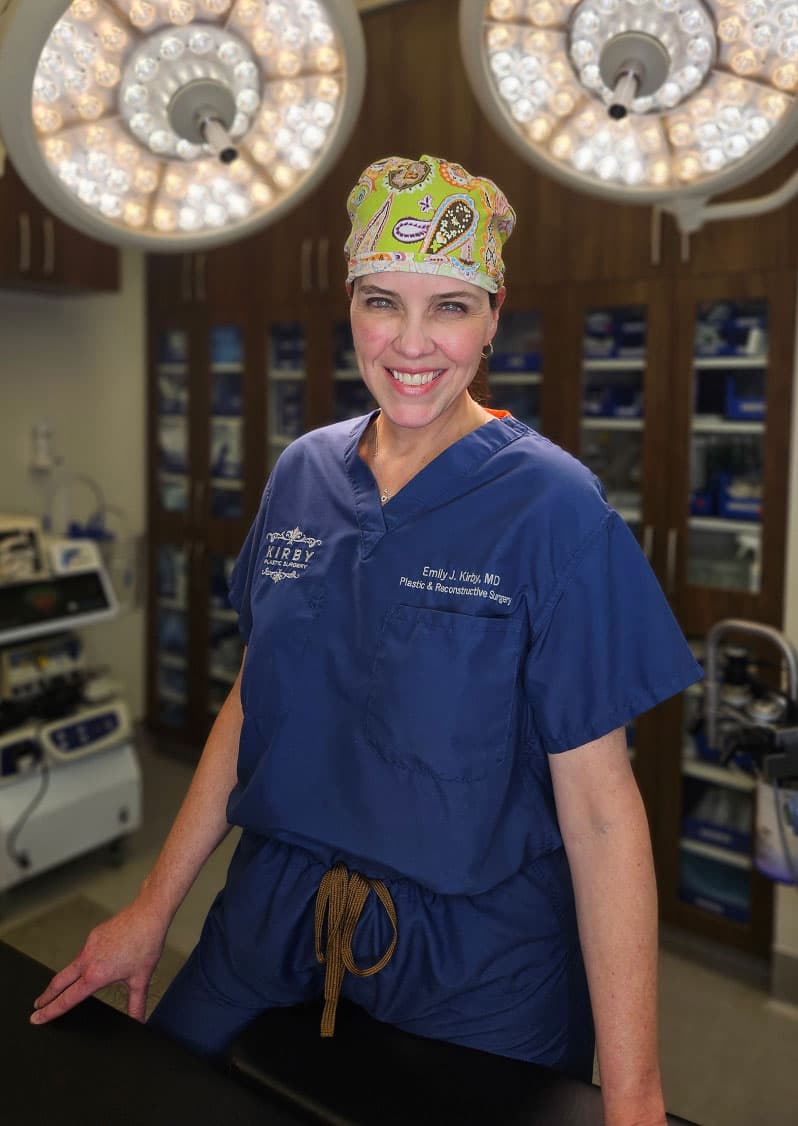
Female Plastic Surgeon Fort Worth
- Board-Certified Plastic Surgeon
- Over 14 years of experience in private practice
- Founder and Medical Director of Kirby Plastic Surgery, Kalos Medical Spa, and City Surgery Center—a Quad A-accredited, state-of-the-art facility located onsite
- Specialist in breast surgery and body contouring, including postpartum
- Castle Connolly Top Doctor since 2019
- First female Chief of Plastic Surgery, Texas Health Resources Harris Methodist Hospital
Ultrasound vs. Mammograms for Breast Implant Monitoring
It is important to understand that mammograms focus on examining the breast tissue, not the implant. A mammogram does not consistently assess implant integrity well. Routine ultrasound surveillance provides peace of mind and assurance that your implants are in optimal condition.
Ultrasound monitoring helps detect silent ruptures, fluid buildup, or other concerns that may not be noticeable otherwise.
Dr. Kirby advises all patients to perform monthly breast self-exams, as recommended by the American Cancer Society, and to schedule routine mammograms to monitor the health of your breast tissue starting at age 40, or earlier, if advised by your physician.
FDA Guidelines for Monitoring Silicone Implants
The FDA advises:
- An initial ultrasound or MRI at 5-6 years after implant surgery.
- Follow-up imaging every 2-3 years thereafter, or as directed by your plastic surgeon.
Early detection allows you to take action before an issue causes further problems, and this schedule ensures consistent monitoring throughout the lifespan of your implants.
Who is Eligible for a Breast Implant Ultrasound at Kirby Plastic Surgery?
Ultrasounds are available at no cost for patients who had breast augmentation, breast lift with implants, or implant exchange surgery with Dr. Kirby.
If you had surgery elsewhere and your implants are at least 5 years old, you may schedule an ultrasound appointment for a fee that can be applied toward future surgery at Kirby Plastic Surgery.

“I could not be happier with my experience with Dr. Kirby and her staff! I was very nervous about getting a breast augmentation, but during the consultation, all my questions and concerns were addressed before I could even ask them. Dr. Kirby made me feel so comfortable. I had no complications with my surgery. I am so pleased with the way I have been treated! I have recommend many people to her and I will continue to do so!”
What to Expect During Your Breast Implant Ultrasound
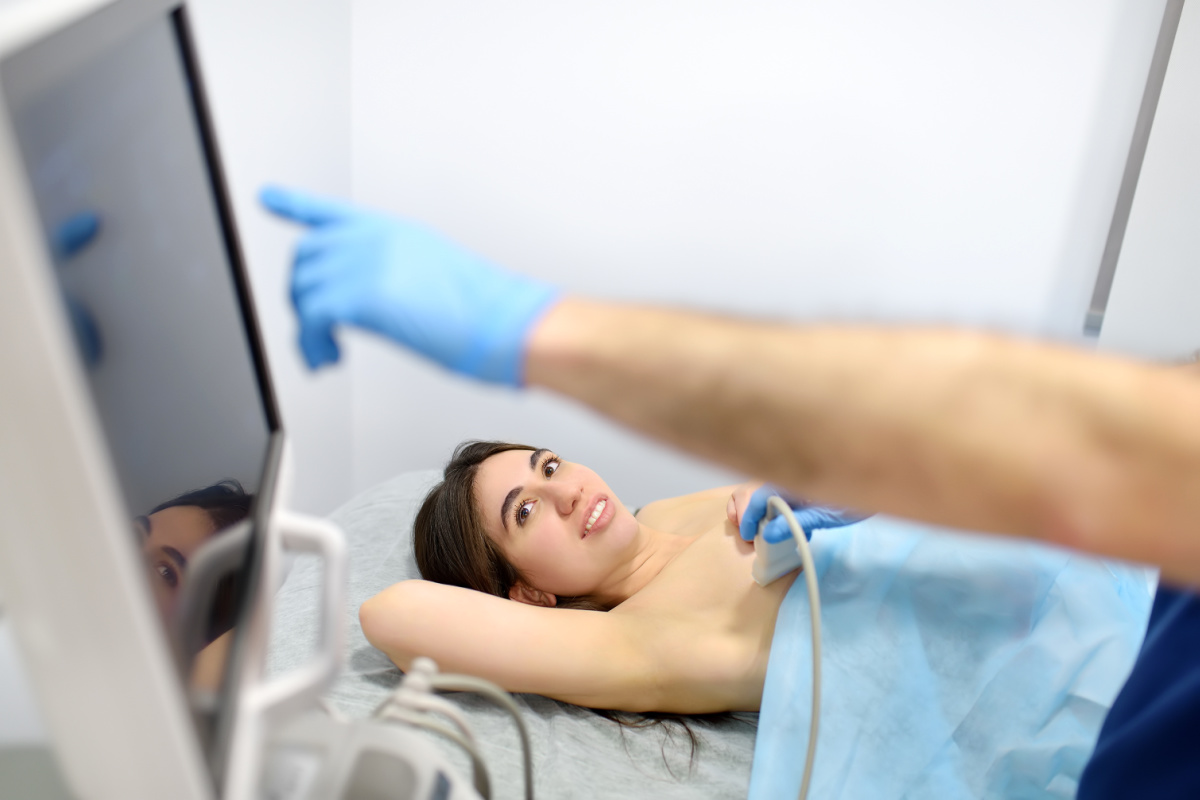
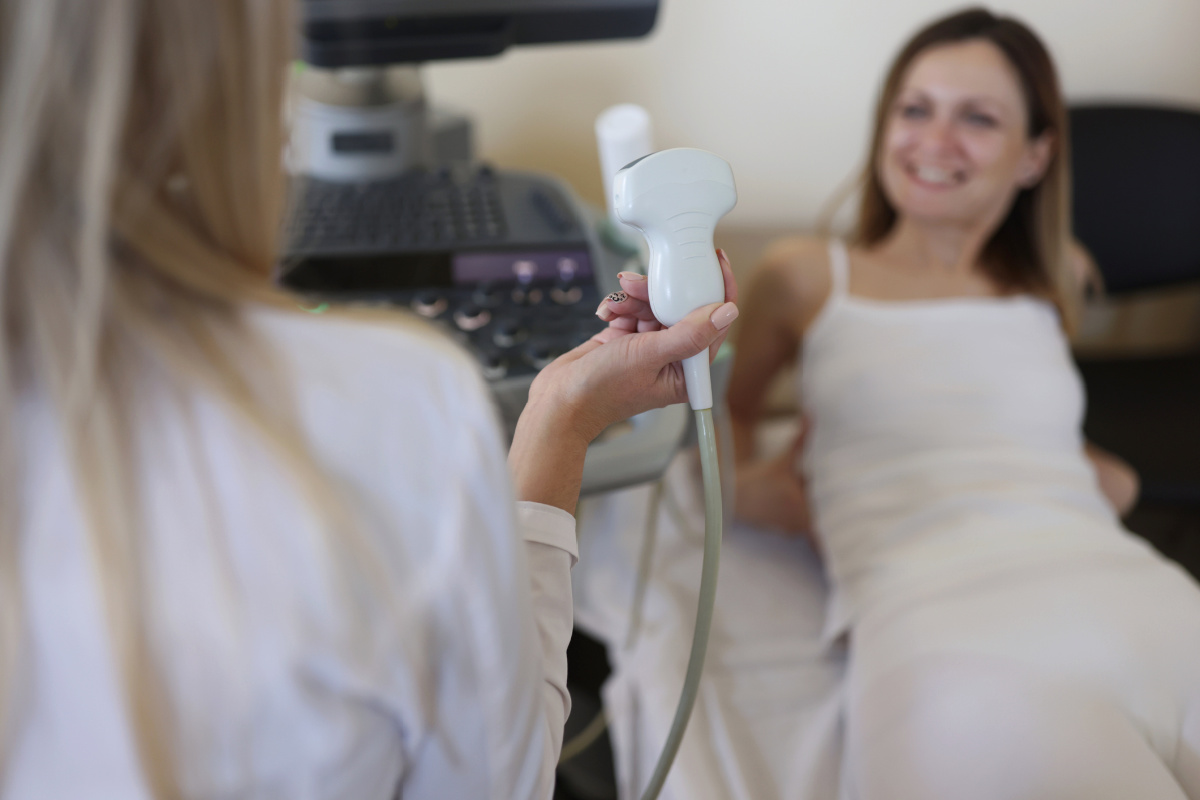
Your ultrasound appointment is quick and comfortable. A water-based gel is applied to your skin and the handheld ultrasound device is moved over your breast to capture clear images. The procedure is painless and takes less than 30 minutes from start to finish.
Dr. Kirby reviews the images and immediately shares the results with you.
What If the Ultrasound Detects an Issue?
If your ultrasound reveals a rupture, fluid buildup, or another concern, Dr. Kirby discusses the findings with you right away. In some cases, she may recommend additional imaging or evaluation, such as an MRI scan.
Because of Dr. Kirby’s expertise in aesthetic and reconstructive breast procedures, you will be in good hands if surgical correction is needed, such as breast implant removal or a breast implant exchange with modern breast implants.
Even if your implants are intact, routine monitoring gives you confidence in your long-term implant health.
- Key Benefits
- Glossary
- Painless and convenient
- Immediate results
- No referral needed
Axillary lymph nodes: Small, oval-shaped glands in the underarm that help filter waste and fight infections.
Breast abscess: A pocket of pus in the breast, usually caused by an infection.
Breast capsule: The thin layer of scar tissue that naturally forms around a breast implant as the body heals.
Breast imaging techniques: Different types of scans used to examine breast tissue and implants, including ultrasound, mammograms, and MRIs.
Breast tissue: The natural tissue that makes up the breast, including fat, glandular tissue, and connective tissue.
Breast ultrasound: A non-invasive imaging method that uses sound waves to create real-time images of breast tissue and implants.
Capsular calcifications: Calcium deposits that can form in the scar tissue around an implant over time.
Capsular contracture: A tightening of the scar tissue around a breast implant that can cause discomfort or changes in breast shape.
Contrast-enhanced MRI: A detailed breast scan using an injected dye to highlight structures more clearly, often used for implant rupture detection.
Cyst: A fluid-filled sac that can develop in breast tissue.
Extracapsular rupture: When silicone from a ruptured implant leaks beyond the scar tissue capsule.
Fibrous capsule: Another term for the scar tissue that forms around an implant.
Fibroadenoma: A non-cancerous lump in the breast, made of glandular and fibrous tissue.
Implant rotation: When an implant shifts from its intended position, which may cause changes in breast shape.
Implant surveillance: Routine imaging checks to monitor the health and condition of breast implants over time.
Implant-related complications: Any issues that can arise with breast implants, such as rupture, capsular contracture, or shifting.
Intact implant: A breast implant with no signs of rupture or leakage, confirmed through imaging.
Intracapsular rupture: A rupture where the silicone stays within the scar tissue capsule.
Linguine sign: A wavy, ribbon-like pattern seen on MRI that indicates a ruptured silicone implant.
Magnetic resonance imaging (MRI): A detailed imaging technique that uses magnets and radio waves to create clear, cross-sectional images of breast tissue and implants.
Mammogram: An X-ray of the breast used for cancer screening, but not ideal for evaluating implant integrity.
MRI: Short for magnetic resonance imaging, optionally ordered after ultrasound to confirm an implant rupture.
Pectoral muscle: The chest muscle beneath the breast—implant placement can be either above or below this muscle.
Radial folds: Natural folds in an implant’s shell that can be seen on ultrasound or MRI.Sonographic: Used to describe findings or techniques during an ultrasound exam.
Frequently Asked Questions
Breast Implant Ultrasound in Fort Worth
Your care does not end in the operating room at Kirby Plastic Surgery. Whether you are due for your routine implant check-up or simply want reassurance, Dr. Kirby offers ultrasound surveillance to patients with silicone gel-filled breast implants. When you are ready, call or text 817-292-4200 to book your breast implant ultrasound at our Fort Worth plastic surgery center.